
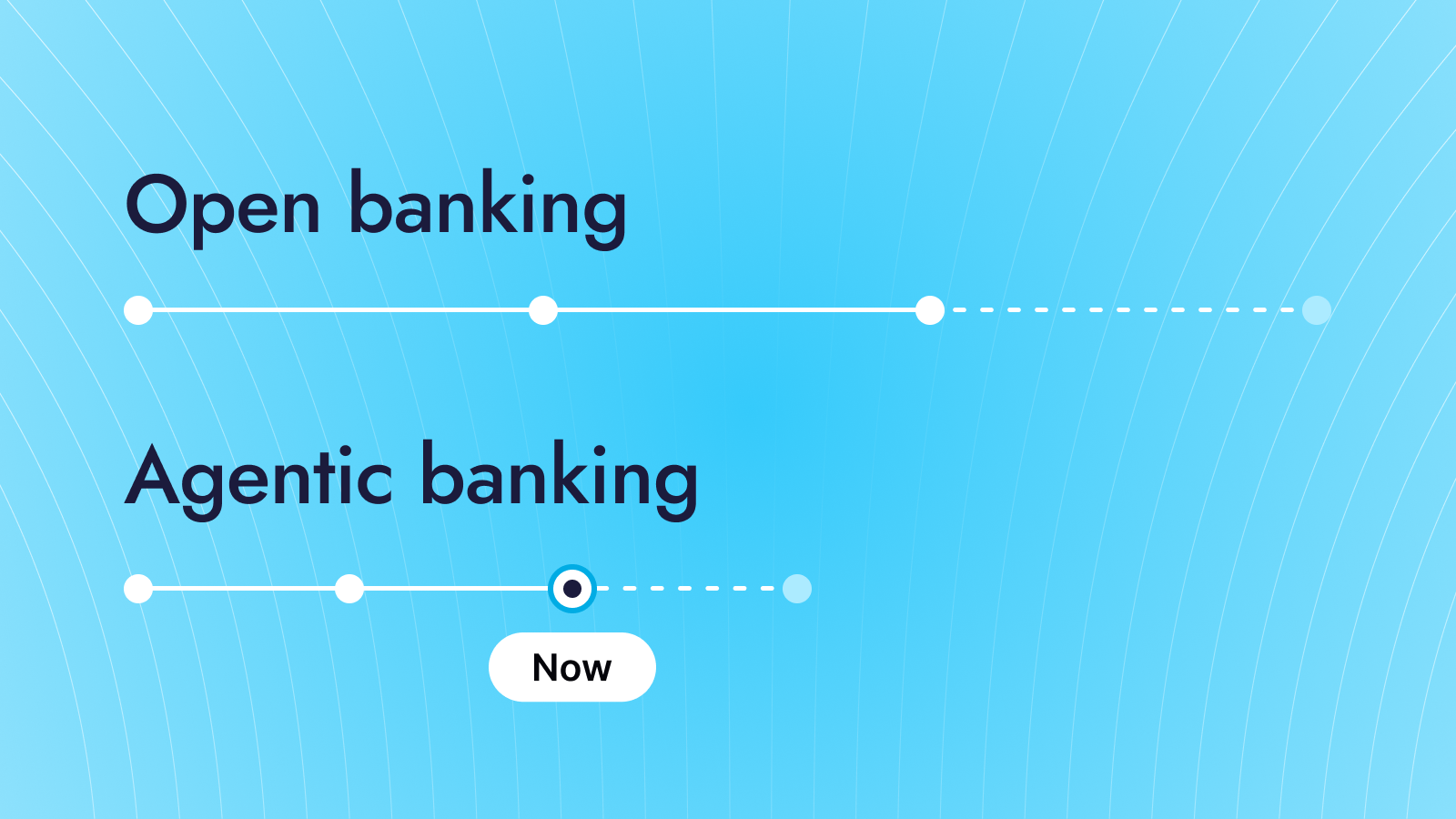

When customers first wanted to share their data with fintechs, they needed to share their credentials, and banks responded with warnings and blocks. What changed things was knowing who was connecting. Agentic banking is at the same starting point.
Last month RBC and TD told Global News they're blocking third-party personal AI agents from direct access to online banking. BMO said it doesn't allow AI agents access to its digital properties or to carry out transactions. CIBC said it doesn't support personal agents opening or accessing accounts. Scotiabank said it will restrict them.
If you've worked in Canadian open banking over the past ten years, this will look familiar. When something new arrives, and banks don't yet understand it, the first move is to block it and reassess later. We've lived through that cycle at Flinks.
Block first, then reassess
In the 2010s, Canadians wanted to use their financial data in the fintech apps they chose, but banks had no sanctioned way to share it. So customers shared their online banking credentials and connected through aggregators such as Flinks. The bank often couldn't tell a customer apart from the service connecting on their behalf.
The banks were rightly concerned as they couldn't see who was coming in or what they were doing. Their first response was policy. Terms of service warned customers not to share their credentials (The Logic), customers were told they could lose fraud protection if they did (Money.ca), and some banks blocked the traffic.
Blocking didn't change what the customers wanted, so the relationship changed. Some started offering data access agreements, essentially whitelisting arrangements, so they could see who was connecting and when. Today customers connect with their consent, and at many banks, the bank can see who's on the other end.
The next step is a regulated, consent-based framework. Europe was one of the first to act. PSD2’s technical standards, in effect from September 2019, required banks to give licensed third parties a secure way into customer accounts, and dedicated interfaces became the norm (EU Regulation 2018/389). Canada is still getting closer. Draft Consumer-Driven Banking regulations were released in June 2026 (Canada Gazette) and on November 20, Ottawa named FDX (Financial Data Exchange) as the framework’s technical standards body (Investment Executive). In the interim, we continue to keep Canadians connected to their financial data, keep looking for new ways for them to access it, and build the consent-based infrastructure banks will need when the framework finally arrives.

Agents are on the same path, faster
Traffic from AI agents that take actions online increased by 7,851% in a year (HUMAN Security). In June 2026 automated traffic overtook human traffic on Cloudflare's network, more than a year earlier than its CEO predicted (Fortune).
The bank blocks followed the Axios report from October 22nd which reported that some agents had taken actions that their users hadn’t actually requested and that users had in fact shared their login credentials with agents (Global News). It's the same issue banks had prior to the whitelisting exercise: they simply can't see who is coming in. An agent that signs in with a customer's password can do anything the customer can do, and the bank can’t distinguish that from the customer doing it themselves. TD said its block would stay in place "while we ensure the appropriate safeguards, authorization mechanisms and oversight are in place." I take that to mean they’re asking for time to catch up, not that it’s a permanent ban. RBC, TD and CIBC all focus on third-party personal agents using shared credentials, and none of them rule out a channel that the bank itself might run.
Customers aren't waiting. In a Scotiabank survey by The Harris Poll, 37% of Canadians said they'd used AI tools to manage their money as of April 2026 (up from 13% in November 2024). Questrade already allows its clients to link their investment accounts to ChatGPT and Claude (The Logic). If the bank doesn’t provide a formal route, then the customer will find their own.
Use the interim to build the channel
There are no rules in place for agents at this stage. The draft Consumer-Driven Banking regulations make no reference to them, and OSFI's July 2026 bulletin covers how banks manage their own AI, not a channel for customers' agents. In October, Superintendent Peter Routledge indicated that OSFI is looking at the prospect of an AI "safety code" but there's no draft at the moment, and a consultation could come as early as spring (The Logic).
Banks don't have to wait. A bank can publish its own MCP (Model Context Protocol) server, an official way for assistants like Claude and ChatGPT to connect to it, which would be built on the bank's own APIs rather than a shared password. The customer gives consent to what their agent can do. The bank can see which agent is connecting and where it's coming from and then decide which of its APIs that agent is allowed to use.
That control is really the point: a bank doesn't need to start with money movement. A first version can be read-only: helping a customer track spending, plan a trip, build a savings budget, etc. No transfers, no account opening. They can add on when they’re ready.
Some financial institutions are already moving. Wealthsimple is launching Penny, an AI assistant that prepares transfers and trades for customers to approve, and plans to let customers use ChatGPT and Claude with their accounts starting in early 2027 (The Logic). Separately, other financial institutions have come to us asking how they can get ahead of this. Flinks can build and maintain an MCP server inside a bank's own environment, using the APIs that the bank chooses to expose. That’s pretty much how partners built banks' mobile apps ten years ago. Julien Cousineau details how that works in the next post in this series.
Blocking buys banks time, but it won't last forever. There are no rules yet around agents. The first mover may not even be a bank. The institutions that build the official channel first will be the ones that set the terms for how agents work with Canadian banks, and the others will just have to work to those terms.
If you'd like to talk about where your bank might start off, please reach out.