


Canada’s largest financial institutions have spent years investing in up-to-date infrastructure, and many now have well-built APIs for payments and account data. The ambition behind that investment is clear: new services for customers, new commercial relationships, and new ways to reach businesses inside the platforms they already use. In my recent conversations with banks, the focus is on what comes next: which experiences to build on those APIs, who to build them with, and how quickly they can reach the market.
Today, Flinks is launching Professional Services and Managed Services for exactly this. We build new financial capabilities alongside an institution's team, and run the infrastructure behind them once they're live. Here is where a technology partner fits, and what that looks like in practice.
Where a technology partner fits
Enterprise roadmaps are planned far in advance. Most of the ones I see are committed a year or more out, which means a strong idea that shows up in the spring competes with everything already promised for the following year.
Opening an API to third parties also prompts questions: Who gets access? How do they get onboarded? What happens when it breaks, and who picks it up?
ave one institution control over every way its customers pay, with everything landing in one account, making
Institutions have strong teams. Building external-facing financial capabilities is a specialty in its own right, and Flinks does it every day, so a project like this can start while internal teams stay on their own roadmaps.
What it looks like in practice
Here is a recent example, with the names left out.
A Canadian bank came to us with a set of payment APIs: account-to-account transfers, bill payments, and Interac e-Transfer. One of its commercial clients runs a software platform that collects payments from many customer organizations. For that platform, the payment side was a mess. Funds arrived through different channels, reconciliation was close to impossible, and invoicing took far more effort than it should.
The obvious read is a payments project. Put the bank’s rails inside the platform, make collection and reconciliation simple, done.
The bank’s real interest was deposits. The platform retains considerable balances, and the bank’s commercial strategy centers on winning and keeping clients like that. Embedding its payment rails directly into the platform made the bank part of the business's day-to-day operations. The platform got one institution handling every way its customers pay, with everything landing in one account, which makes reconciliation simple. The bank got a deeply embedded commercial relationship.
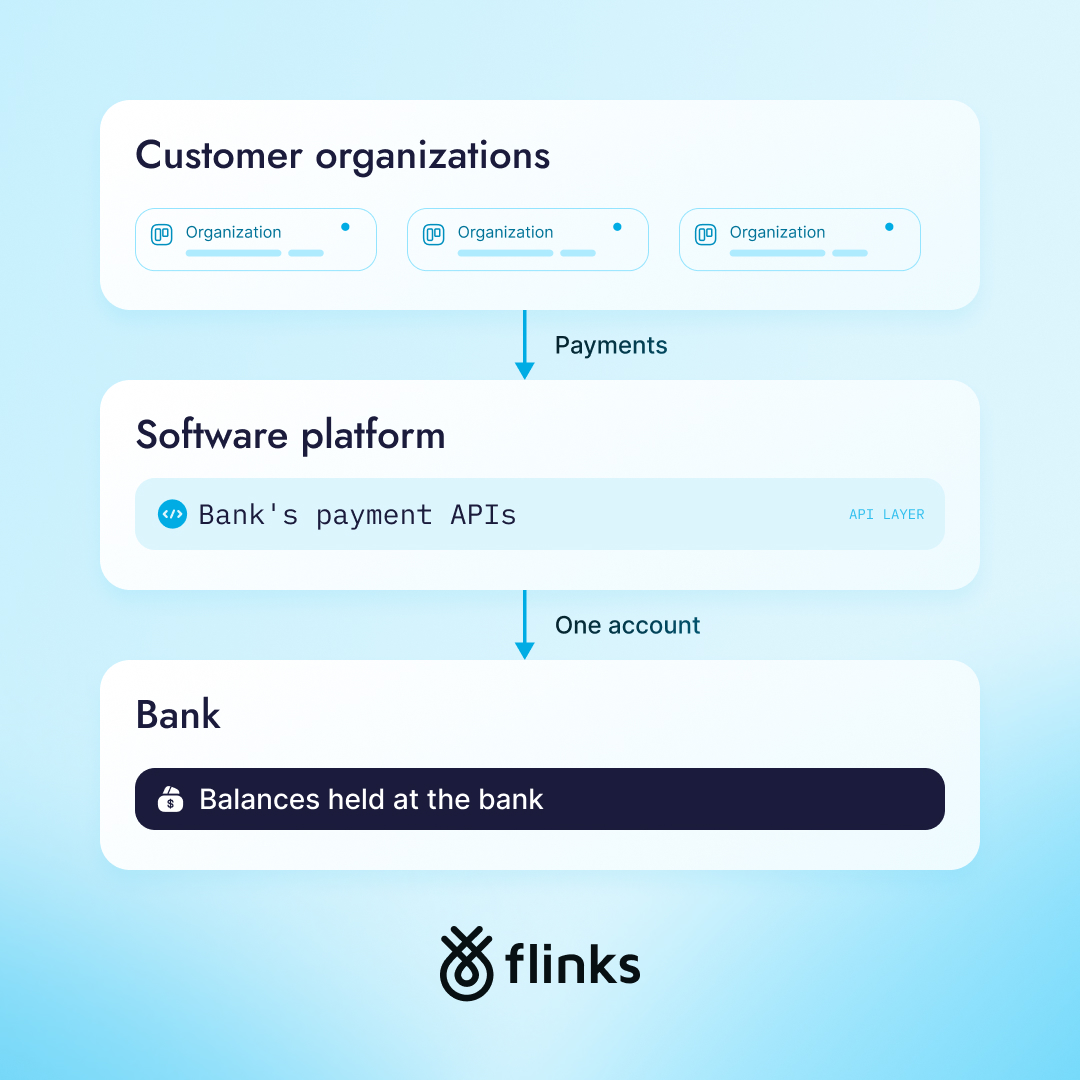
The bank already knew what it wanted. It needed someone to take APIs built for internal use, make them external-facing, launch them on a third-party platform, and keep them running.
That is the pattern I keep seeing. An API's value often lies in the relationship it enables, and building that relationship takes a specific kind of work.
Three kinds of work between an API and revenue
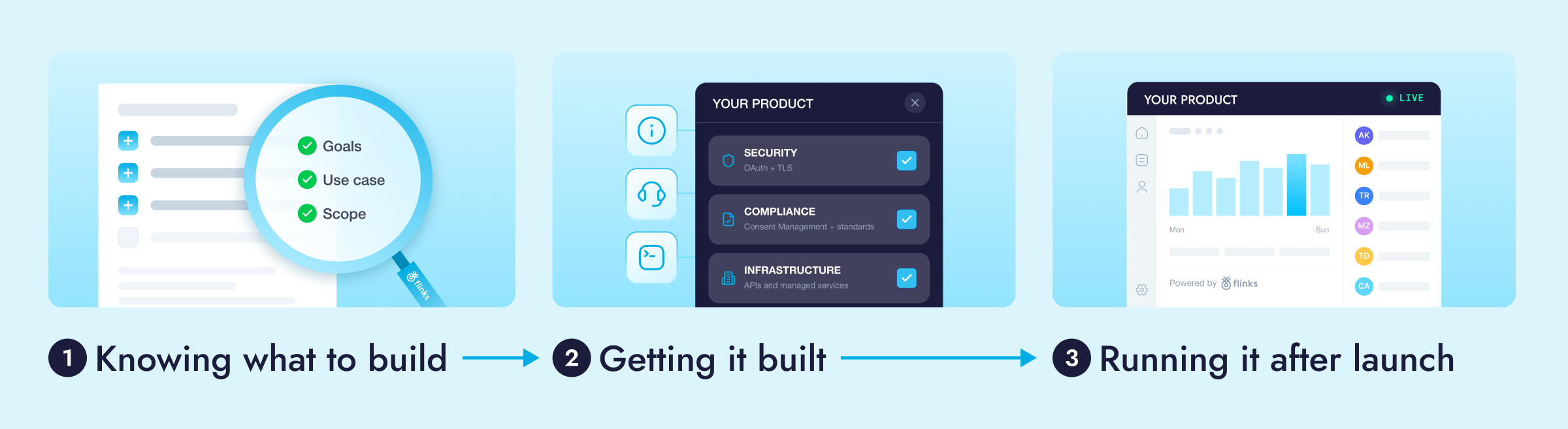
Knowing what to build. The bank above started with a business goal: win and keep commercial clients that hold large balances. Its payment APIs were the tool it reached for to get there. Some institutions come in with a specific goal. Others bring the APIs and ask what we're hearing from the fintechs and platforms we work with, and the work starts there.
Getting it built. On that project, the first step was a paid discovery phase to map how the APIs would work outside the bank's own channels. A committed team is now taking it through the build.
Running it after launch. Once the integration is live, the APIs have to stay up, and the platform needs support. When the bank brings the same setup to its next commercial client, that work starts again for a new platform.
A partner that covers all three helps an institution move at the speed a competitive market rewards.
The same shape shows up well beyond embedded payments. We've built account switching with one of Canada's largest banks, moving a customer's Interac e-Transfer contacts and bill payees to their new account. Investment transfers, payroll switching, and white-label credit underwriting follow a similar path: the institution sets the ambition, and we build compliant experiences with them and keep it running.
Why we’re launching Professional Services and Managed Services
This is the work Flinks has been doing with clients for years, often without a name for it. Today it has two: Professional Services, for scoping and building the capability, and Managed Services, for running it once it’s live. The team that builds a capability is the team that stays to run it. You can read the full announcement here.
The principle underneath is simple. If it connects accounts, makes financial data useful, or moves money, we can build it with you.
The question I’d leave with any institution is practical. Look at the APIs you already have, and ask who outside your walls would build part of their business on them. That list may be longer than expected, and one of the first names on it may be a client you already serve.
Have something you want to build? Talk to our Enterprise team.